
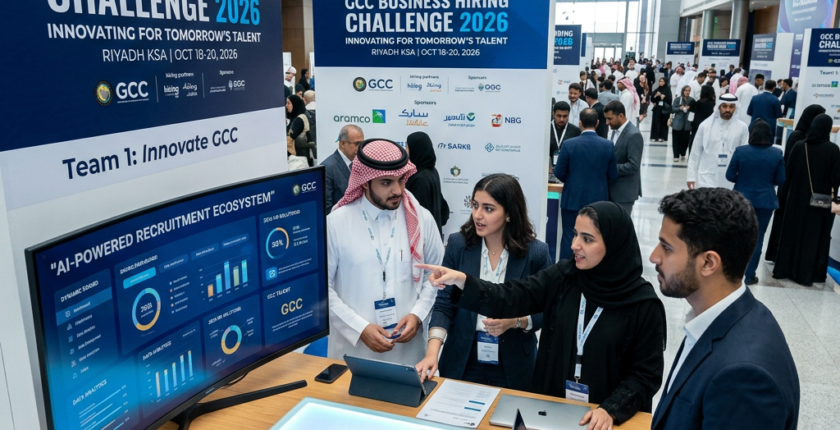
Why GCC Companies Are Struggling to Hire Top Talent in 2026
Across the GCC, businesses are expanding rapidly — but many companies are facing a major challenge: finding and retaining the right talent.
From Dubai and Abu Dhabi to Riyadh, Doha, Muscat, Kuwait City, and Manama, employers are reporting longer hiring cycles, lower application quality, and increasing competition for experienced professionals.
The reality is that recruitment in the Gulf has changed dramatically.
Companies still relying on outdated hiring methods are falling behind, while businesses adopting modern recruitment strategies are attracting stronger candidates faster.
The GCC Talent Market Has Become Highly Competitive
The Gulf region continues to experience strong growth across sectors including:
- Technology
- Construction
- Healthcare
- Finance
- Hospitality
- Oil & Gas
- Real Estate
- Logistics
- Renewable Energy
Large-scale government initiatives and private sector expansion are creating thousands of new jobs across the Middle East.
At the same time, the number of skilled professionals actively seeking career growth in the GCC is increasing.
So why are many companies still struggling to hire?
1. Slow Hiring Processes Are Losing Candidates
One of the biggest recruitment challenges in the GCC is delayed hiring decisions.
Many companies still follow lengthy processes involving:
- Multiple interview rounds
- Delayed feedback
- Manual CV screening
- Slow internal approvals
Top candidates often receive multiple offers and accept opportunities before employers complete their recruitment process.
What successful companies are doing differently:
- Shortening hiring timelines
- Using AI-powered screening tools
- Automating shortlisting
- Improving HR coordination
- Providing faster candidate feedback
Speed has become a competitive advantage in recruitment.
2. Poor Job Descriptions Are Reducing Application Quality
A large number of GCC job advertisements remain too generic.
Common issues include:
- Unclear responsibilities
- Missing salary information
- Unrealistic requirements
- Weak employer branding
- Lack of career growth details
Candidates today expect transparency and professionalism before applying.
Companies with optimized and detailed job ads attract:
- More qualified applicants
- Better candidate engagement
- Higher interview attendance rates
3. Employer Branding Is Now Critical
Professionals are researching companies before applying.
Candidates frequently review:
- LinkedIn presence
- Company culture
- Employee reviews
- Career growth opportunities
- Employer reputation
Businesses without a strong employer brand are struggling to compete for top talent.
In 2026, recruitment is also marketing.
Companies that invest in employer branding are building stronger hiring pipelines across the GCC.
4. Salary Benchmarking Is Becoming Essential
Many employers are losing candidates because compensation packages are no longer aligned with market expectations.
Across the UAE, Saudi Arabia, Qatar, and Oman, professionals are increasingly comparing:
- Base salaries
- Housing allowances
- Medical benefits
- Work flexibility
- Career development opportunities
Without proper salary benchmarking, companies risk:
- High turnover
- Offer rejections
- Employee dissatisfaction
- Increased recruitment costs
Competitive compensation is now directly linked to talent retention.
5. Candidates Expect Better Recruitment Experiences
The candidate experience has become a major hiring factor.
Job seekers expect:
- Fast communication
- Professional interviews
- Clear timelines
- Transparent feedback
- Mobile-friendly applications
Poor recruitment experiences damage employer reputation and reduce future applications.
Companies improving the candidate journey are seeing stronger hiring outcomes.
6. AI Is Transforming Recruitment Across the GCC
Artificial Intelligence is rapidly changing how companies hire.
Modern AI recruitment systems help businesses:
- Match candidates faster
- Reduce hiring bias
- Improve CV screening
- Identify top talent efficiently
- Lower recruitment costs
AI-powered recruitment is becoming increasingly important for SMEs and growing businesses across the Middle East.
Companies adopting AI hiring tools are gaining a strong competitive edge.
Most In-Demand Skills in the GCC Right Now
Employers across the Gulf are actively searching for professionals with skills in:
- Artificial Intelligence
- Data Analytics
- Cybersecurity
- Cloud Computing
- Sales & Business Development
- Finance & Accounting
- Project Management
- HR & Talent Acquisition
- Digital Marketing
- Engineering
Candidates with both technical expertise and strong communication skills are especially valuable.
How GCC Companies Can Improve Hiring Results
Build a Strong Employer Brand
Showcase company culture, growth opportunities, and employee success stories.
Modernize Recruitment Systems
Use AI-powered recruitment tools to speed up hiring and improve matching.
Improve Job Advertisements
Write clear, professional, and SEO-optimized job descriptions.
Reduce Hiring Delays
Top talent moves quickly — recruitment processes must do the same.
Focus on Candidate Experience
Strong communication and transparency improve employer reputation significantly.
Final Thoughts
The GCC job market is evolving rapidly, and recruitment strategies must evolve with it.
Companies that continue using outdated hiring systems will struggle to attract and retain top professionals.
Businesses investing in:
- AI recruitment
- Employer branding
- Faster hiring systems
- Better candidate experiences
will dominate the future of hiring in the Middle East.
For employers across the UAE, Saudi Arabia, Qatar, Oman, Bahrain, and Kuwait, recruitment is no longer just an HR function — it is a direct driver of business growth.